
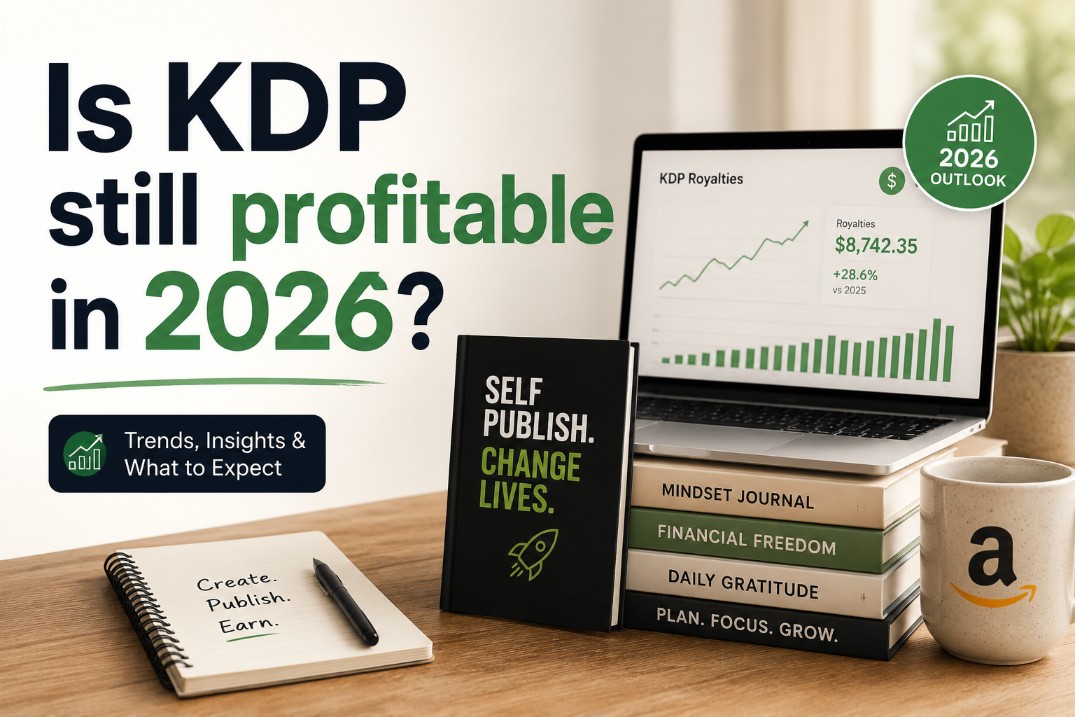
Yes. But the easy phase is gone.
A few years ago you could publish a low-content book, throw in some basic keywords, slap on a decent cover, and still get sales. That's not how it works anymore. AI made book creation faster, and Amazon is now packed with new books in almost every easy niche.
So the real question isn't "is KDP dead" — it's "can a new book still get noticed." Yes, but only if the idea is sharper than another generic upload.
Demand isn't the problem
People are still buying coloring books, activity books, journals, puzzle books, workbooks, and gift books — same as in 2022, and probably the same in 2030. These products are tied to basic human habits: relaxing, learning, gifting, journaling, keeping kids busy.
What changed is choice. Buyers have too many options now, and a book that looks like every other book in its niche just becomes invisible. That's usually what people actually mean when they say KDP "isn't profitable anymore" — the old easy way of selling is gone, not the demand.
AI made the market faster and more crowded
AI cut the time it takes to make a book. That helped serious creators move faster, but it also flooded the market with rushed ones.
Amazon has adjusted: KDP now requires publishers to disclose AI-generated text, images, or translations, and holds them responsible for making sure that content follows its guidelines, IP rules included. AI books aren't a side trend anymore — they're just part of the marketplace.
But AI isn't the real problem. Weak ideas are. A good niche, a strong cover, clean interiors, and real positioning still matter more than how the book got made.
How to check if a niche still has demand
You don't need to guess — Amazon shows you directly.
1. Are big publishers still publishing?
Big publishers don't keep releasing books in a category for fun. If Penguin Random House, HarperCollins, Sourcebooks, DK, Blue Star Press, or similar names are still active in a space, that's a real signal.
Coloring books are a good example. Adult coloring books made a real comeback in the UK in 2025 — Coco Wyo's Cozy Corner and Cozy Cuties hit the top 15 bestseller list, selling close to 500,000 copies combined. A Penguin Random House publisher tied the trend to people wanting a calm, screen-free way to relax. Not a dead category.
2. Are there fresh reviews from 2026?
Open books in the niche and check the review dates. If reviews are still landing in 2026, people are buying recently enough to leave feedback — like this kids coloring book with verified reviews from June 2026.
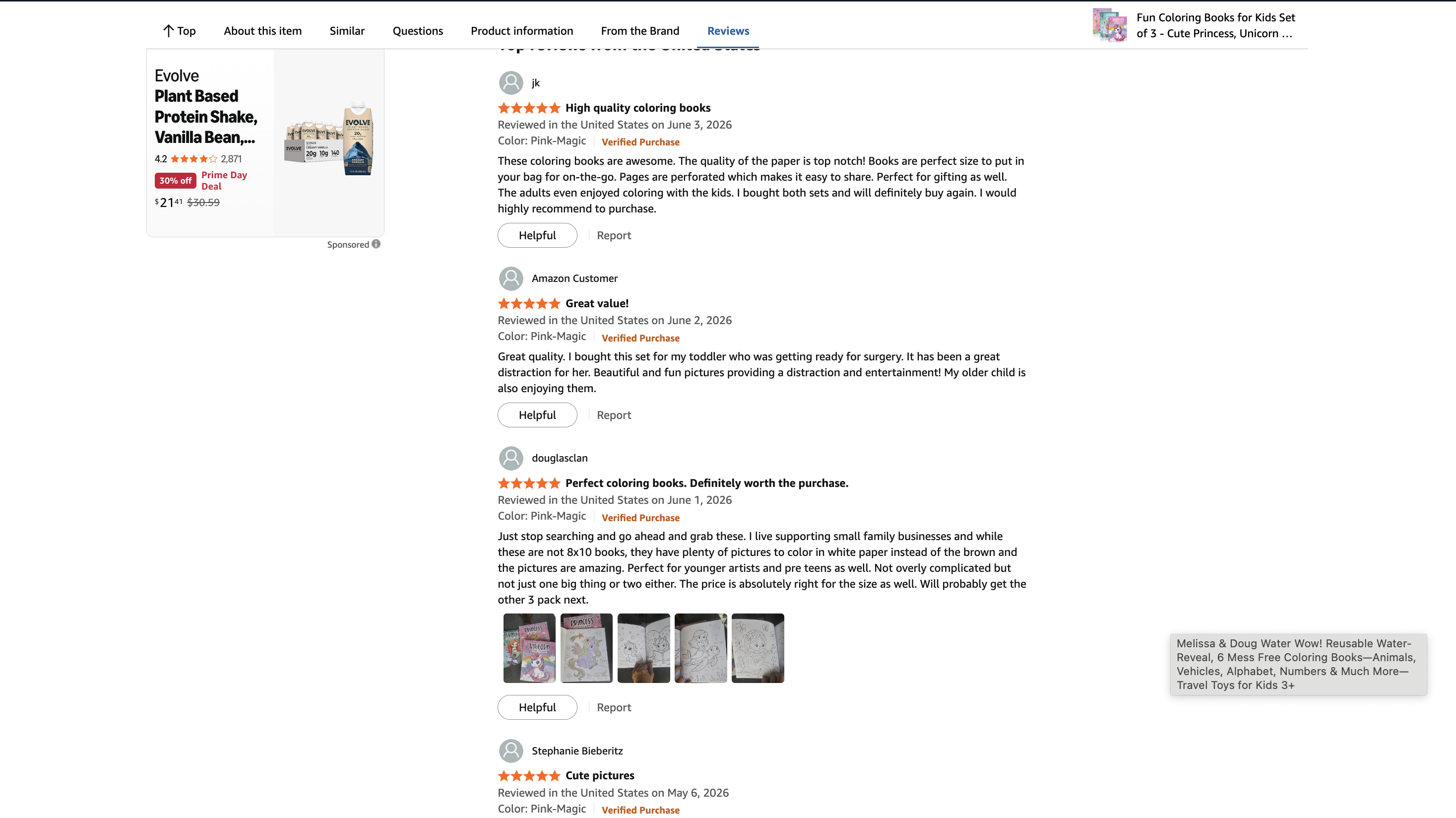
Old reviews alone can mislead you. A book might have sold well in 2021 and gone quiet since. Fresh reviews tell you the listing is still alive.
3. Does Amazon show recent purchase numbers?
Sometimes Amazon labels a listing "3K+ bought in past month" or "10K+ bought in past month." Below, a kids sticker and activity book shows 10K+, and a kids coloring set shows 3K+ — thousands of buyers in a single month, for just two listings.
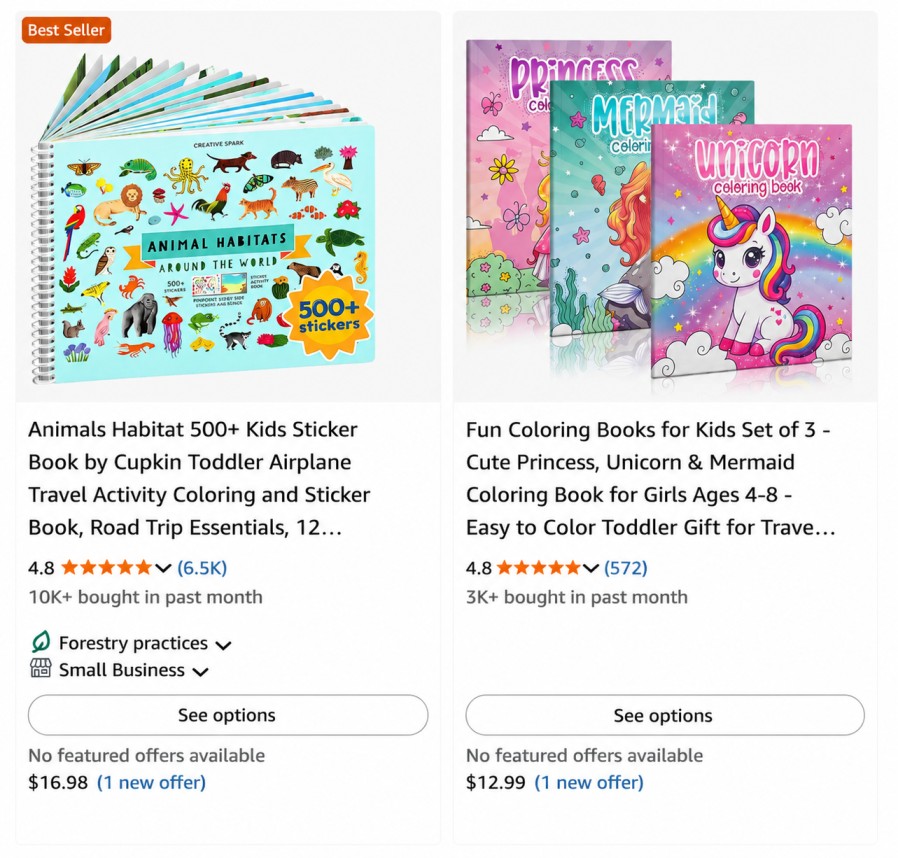
Amazon doesn't show this label consistently, so don't expect it everywhere. But when it shows up, it's a strong clue the niche has active buyers.
4. Are sales spread across many books?
This is where beginners get confused. A single mandala coloring book might show 300 or 700 bought in the past month instead of 10,000+, and people assume the niche is weak.
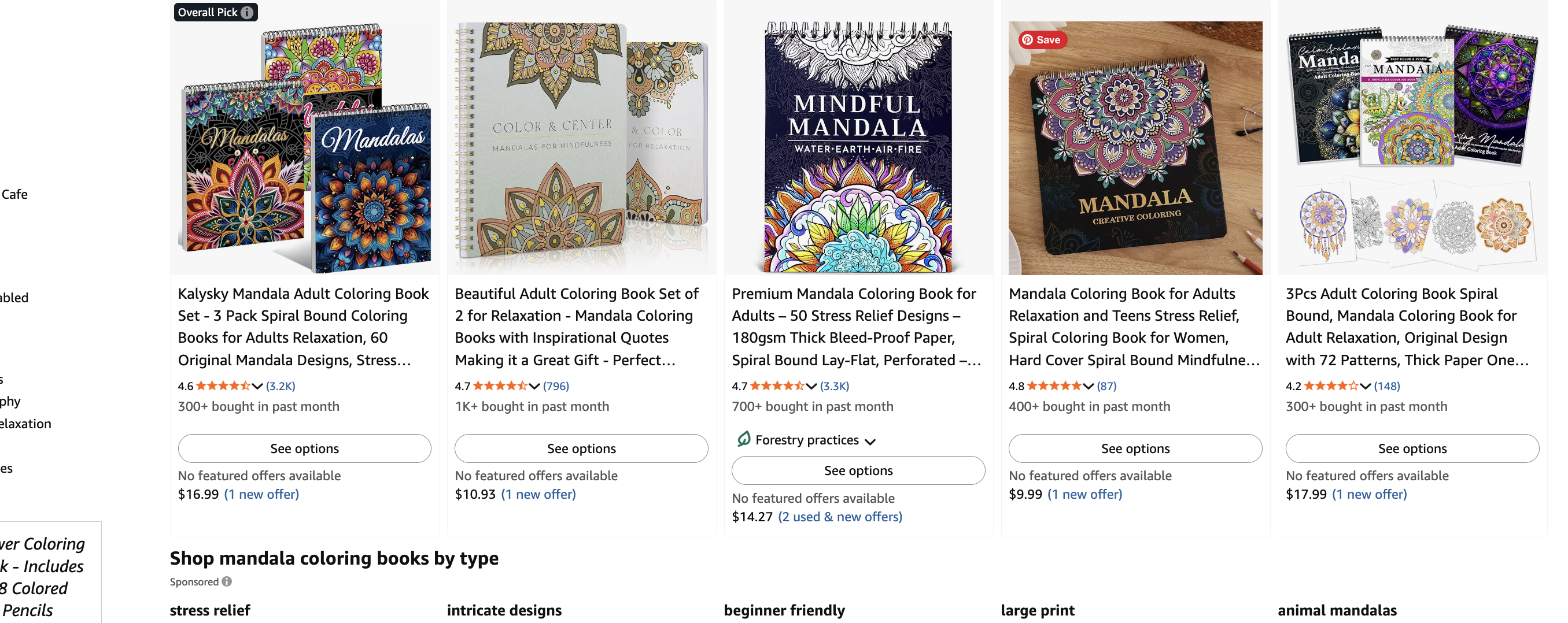
It's not weak, it's competitive. Mandala is a huge niche with hundreds of books splitting the sales. The opportunity isn't another broad "Mandala Coloring Book for Adults" — it's a sharper angle:
- Large print for seniors
- Easy mandalas for beginners
- Bold mandalas for markers
- Floral mandalas for relaxation
- Giftable mandala sets with a stronger cover
Same demand. Better angle.
The market is niche by niche
KDP isn't one market, it's thousands of small ones. A kids travel activity book behaves nothing like a mandala book. A cozy adult coloring book behaves nothing like a construction-vehicles book for ages 4 to 8. That's why "KDP is dead" is lazy advice — some niches are crowded, some are open, some have demand but weak covers, some have good books but bad targeting. The opportunity is in finding the gap.
Social media lowered the marketing bar
Reaching buyers is easier than it used to be. TikTok, Instagram Reels, Pinterest, and YouTube Shorts can all put a visual book in front of people. You don't need a huge audience — just a book that's easy to show:
- A quick page flip
- A before-and-after coloring clip
- A gift mockup for the niche
- A "screen-free activity" reel
- Pinterest pins for individual page themes
NielsenIQ BookData, Media Control, and TikTok are even launching an official BookTok chart in the UK. Publishing and short-form content are officially connected now. The barrier to reach people is lower; the barrier to stand out is higher.
What actually works now
- The buyer is obvious
- The cover reads clearly at thumbnail size
- The title uses real customer language
- The niche has recent reviews or sales signals
- The interior matches the promise
- The book has a reason to exist beyond being another copy
Weak AI pages and a generic cover will struggle. A book built around a clear buyer and a clear use case can still sell. If you use AI for the pages, use a tool that produces clean, consistent line art at KDP print size, such as the InkChamps KDP coloring book creator, and still review every page yourself.
My honest answer
KDP is still profitable in 2026, just not easy the way it used to be. Demand is there, big publishers are still publishing, reviews are fresh, and strong listings still move thousands of copies a month.
What disappeared is the shortcut. You can't upload a generic book and expect Amazon to do the work — you need real research, a sharper angle, a stronger cover, and some marketing outside Amazon.
KDP isn't dead. Lazy publishing is.
Frequently asked questions
- Is Amazon KDP still profitable in 2026?
- Yes, Amazon KDP can still be profitable in 2026, but the market is more competitive. Generic books are harder to sell, while specific niches with clear buyers, strong covers, and active demand still have opportunity.
- Has AI made Amazon KDP too saturated?
- AI has increased the amount of content on KDP, which makes weak or generic books easier to ignore. It has not removed demand. Strong niche research, better positioning, and quality control matter more now.
- How can I check if a KDP niche still has demand?
- Check for fresh reviews from 2026, Amazon labels such as bought in past month, active big-publisher releases, and multiple listings getting sales instead of relying on one bestseller.
Ready to publish your own coloring book?
InkChamps handles the interior, cover, and KDP formatting — all in one shot.
Create your coloring book