
Best Coloring Book Categories to Sell: The Untapped Educational Niche
If you have spent an evening scrolling Amazon looking for the best coloring book category to sell, you know the feeling. Dinosaurs. Trucks. Unicorns. Cute animals. Mandalas. Page after page of books that look almost the same, each one fighting for the same few buyers with a slightly cheaper price and a slightly brighter cover.
Those categories sell. That is exactly the problem. Everyone found them first.
So instead of asking "what is popular?", I started asking a different question: what are parents looking for right now that almost nobody is making well? The answer surprised me, and it is sitting right in front of us.
The coloring book niches everyone is already selling
Most kids' coloring books on KDP fall into a handful of buckets:
- Toys and vehicles — trucks, trains, tractors, construction machines
- Animals — farm, jungle, ocean, pets, "cute baby animals"
- Fantasy — unicorns, dragons, mermaids, princesses
- Dinosaurs — a category of its own, and a crowded one
- Characters and holidays — generic Christmas, Halloween, Easter pages
There is nothing wrong with any of these. Kids love them. But when you publish into a bucket this full, you are competing on things that are hard to win as a new seller: reviews, ad budget and price. The book has to be cheaper or louder, because it is rarely different.
If you want the full breakdown of the broad niches and how to pick a modifier that makes them defensible, I covered that, with data from 500 Amazon coloring books, in the 10 best coloring book niches for KDP. This post is about one niche that sits outside those buckets.
What sells is what parents are looking for now
Talk to parents today and one theme comes up again and again: they want time with their kids to mean something.
Parents have become far more intentional than even a few years ago. They worry about screen time. Many are homeschooling, part-time or full-time. Many more are supplementing school at home in the evenings and on weekends. They are not just buying something to keep a child busy for twenty minutes — they are looking for new ways to teach, ways that do not feel like homework.
That shows up in how they shop. They add words like learning, educational, STEM and science to their searches. They buy workbooks, flash cards and activity kits. And many of those workbooks end up half-finished, because a child can tell a worksheet from something fun in about two seconds.
Teaching comes in many forms. One of the most natural ones, for children, has been on the kitchen table all along: coloring.
A different kind of coloring book: one that teaches
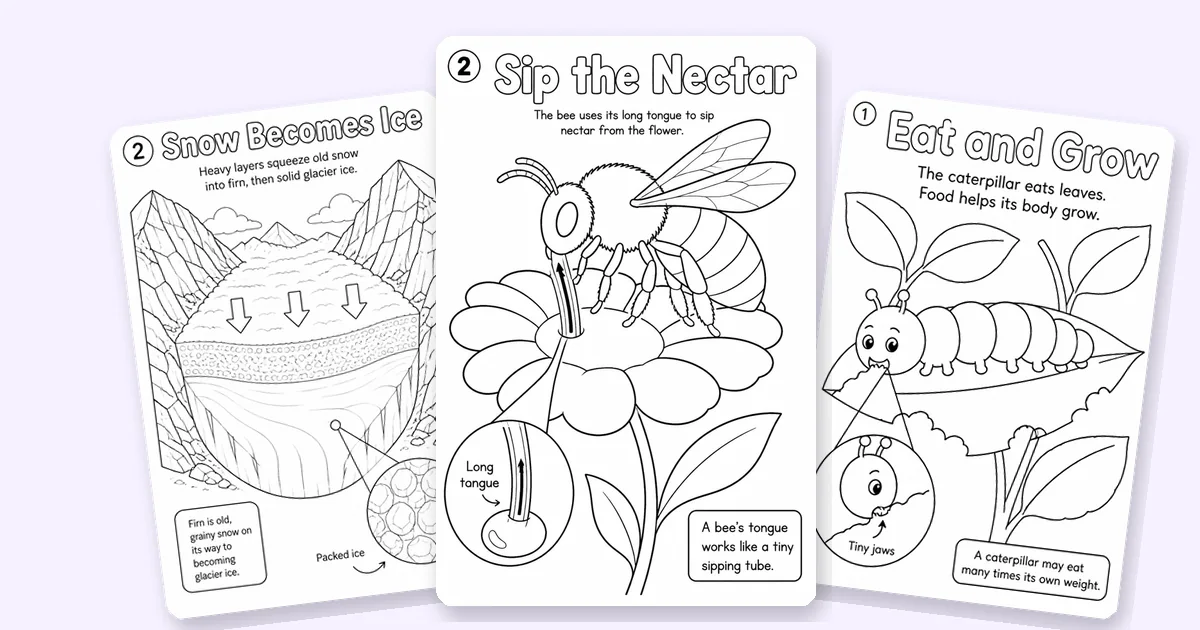
I do not mean a regular coloring book with an educational title. I mean a book where every page teaches one thing.
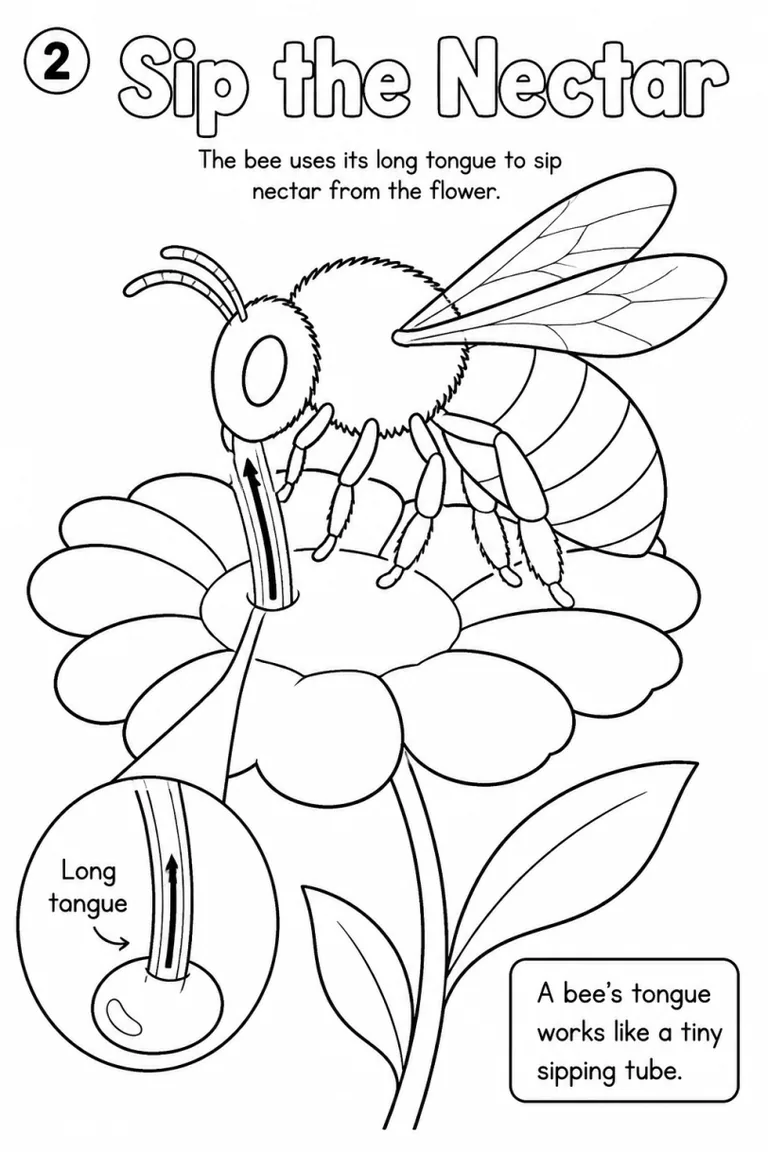
Picture a book called How Bees Make Honey. Page one shows a big flower and a bee, with the title "Flowers Make Nectar" in bubble letters the child can color, one short sentence underneath, and a magnifying circle zoomed in on the drop of nectar. Page two: the bee sipping nectar through its long tongue. Page three: the nectar carried in the bee's special honey stomach. Step by step, until the honey is sealed in the comb.
Each page has:
- One step or one idea, in the order it really happens
- A big picture that does most of the teaching, drawn as clean line art with plenty of room to color
- Very few words — a title, a one- or two-line caption, a label, one fun fact
- A focus: the important part is drawn biggest, so it is the part the child spends the most time coloring
It is not a worksheet, and it is not just a coloring book. It sits right in the middle, and that middle is where the opportunity is.
Why coloring helps children learn and remember
Here is what I find so powerful about this format. When a child colors, they are not being taught at. They are doing it themselves.
- Their attention goes exactly where the lesson is. To color the bee's tongue, they have to look at the bee's tongue, closely, for several minutes. No lecture holds attention that long.
- Pictures and words together are easier to remember than words alone. A short caption next to a picture they have just colored gives the idea two ways back into their memory.
- Doing beats watching. Researchers have found that people remember things better when they draw them than when they only read or write them down. Coloring is not the same as drawing, but it shares the important part: the child's own hands and eyes are working on the thing they are learning.
- It does not feel like school. A child who would push a worksheet away will happily color five pages, and they are learning the whole time because the fun and the lesson are the same activity.
And then the best part, which every parent will recognize. A few days later the child says, out of nowhere, "Did you know bees have two stomachs?" Because they colored it. It clicked, and it stayed.
Why this category is still wide open
Most coloring books are pictures only. Most educational books are workbooks full of text. Very few books do what this format does: teach one topic, step by step, through the coloring itself.
Try it yourself. Search Amazon for a topic plus "coloring book for kids" — the water cycle, the life cycle of a frog, how volcanoes work — and look closely at what comes up. You will usually find single pictures of the subject to color, or a workbook, and far fewer books that walk a child through how it works, one colorable page at a time.
That gap is the opportunity. A clear topic, a clear age and a clear promise ("learn how honey is made while you color it") is a book with a real reason to exist, and a buyer who knows exactly why they want it.
Themes that work for educational coloring books
The best topics share two things: they can be explained in steps or parts, and they make a child curious. Some starting points:
| Theme | Book ideas |
|---|---|
| Science and nature | How bees make honey, the water cycle, how a volcano erupts, photosynthesis, how a seed becomes a plant |
| Life cycles | Caterpillar to butterfly, frog, chicken, sea turtle, apple tree |
| Geography and the Earth | How glaciers form and carve valleys, how mountains are made, where rivers go, the layers of the Earth |
| The human body | How the heart pumps blood, why we brush our teeth, what happens to the food we eat |
| How things are made | Bread from wheat to loaf, paper from trees, chocolate from cocoa beans, how a house is built |
| Curiosity and general knowledge | Why we have day and night, the phases of the Moon, why leaves change color, how rainbows appear |
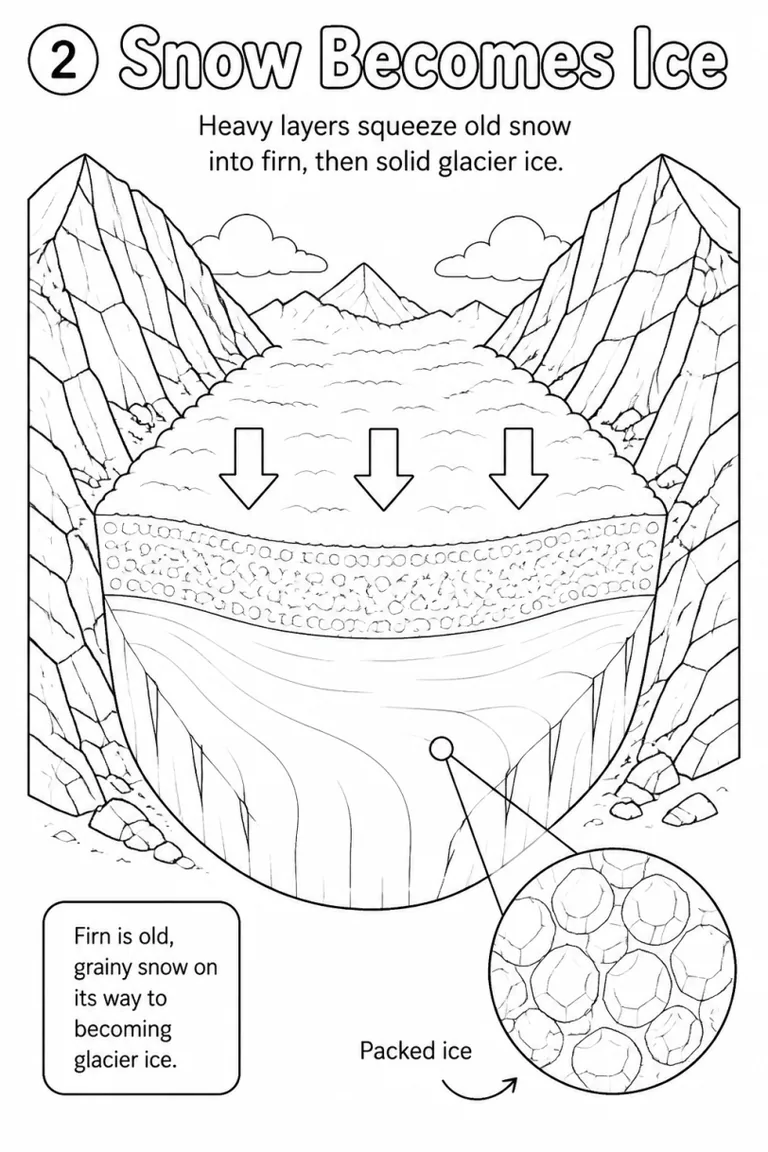
A tip from making these: one topic per book. "Science for Kids" is vague and hard to sell. How a Glacier Forms: A Science Coloring Book for Ages 9–13 tells a parent in one line exactly what their child will learn.
Seasonal editions: the same idea, new every few months
Seasonal coloring books already sell well — but nearly all of them are pictures of pumpkins, snowmen and presents. An educational seasonal book gives parents something they cannot find in the usual stack.
- Christmas — the Nativity story, page by page, for Christian families who want Bible teaching their children can color; or Christmas traditions around the world; or how a Christmas tree grows before it reaches the living room.
- Easter — the Easter story for Sunday school and home, or spring life cycles like chicks hatching and seeds sprouting.
- Autumn — why leaves change color, how squirrels and other animals get ready for winter, where birds fly when they migrate, how the harvest reaches our table.
- Winter — how a snowflake forms, which animals hibernate and why, how penguins stay warm.
- Spring — seed to flower, the life of a frog, how birds build nests.
- Summer — how tides work, life in a rock pool, why the Sun feels hotter in summer.
- Festivals — what Diwali, Lunar New Year, Thanksgiving or Hanukkah celebrate and why, told simply and respectfully, one tradition per page.
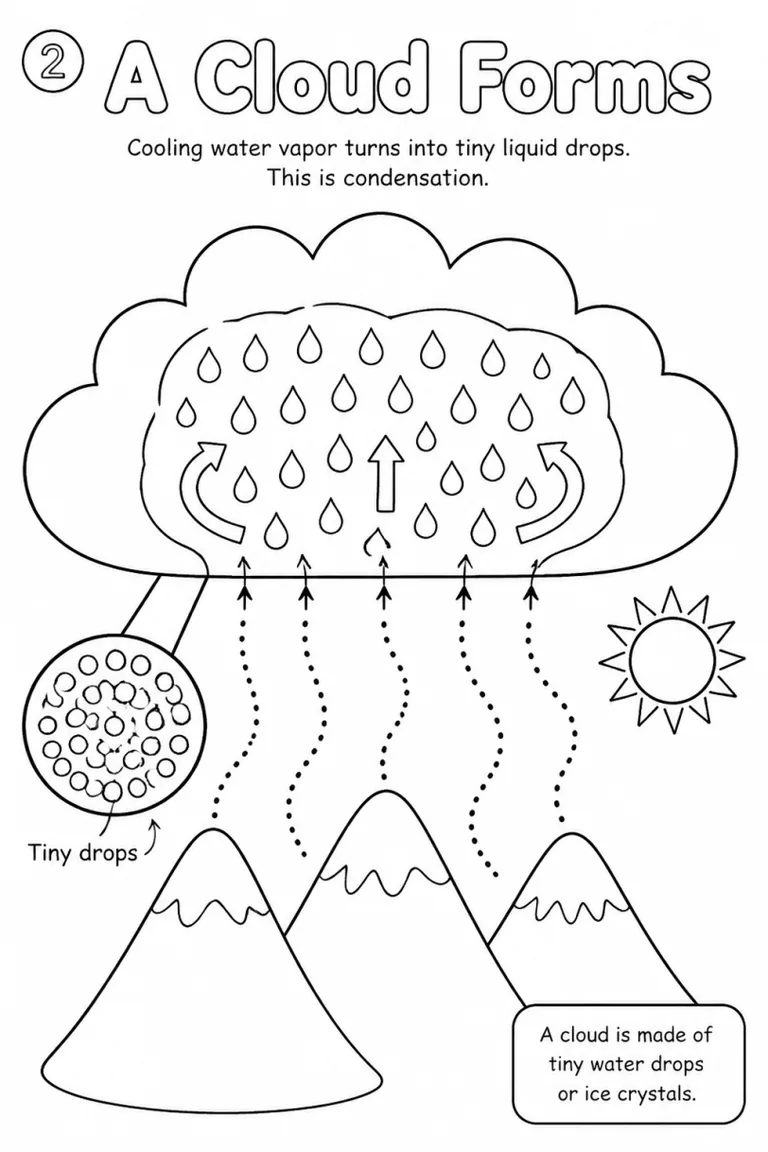
A seasonal series also gives you a natural reason to publish again every few months, to the same parents who bought the last one.
How to make an educational coloring book parents will buy
A few things matter more in this category than in any other:
- Pick an age and write for it. A 4-year-old needs a few big shapes and five words; a 10-year-old wants the real names of things and one surprising fact. Put the age in the title.
- Keep the text short. The picture teaches; the words just point at what matters. If a page reads like a textbook, it has stopped being a coloring book.
- Get the facts right. Parents buy this category because it teaches. Simplify for young readers, but never say anything that has to be unlearned later.
- Leave room to color. Clean outlines, big shapes and no dark filled areas. Educational does not mean cramped.
- Show the pages. Use two or three interior pages in your listing images, so a parent can see the step-by-step format before buying.
- Think in series. One life-cycle book becomes five. One season becomes four. Buyers who liked one come back for the next.
You can draw these by hand, commission an illustrator, or use a tool built for the format. InkChamps has an Educational Coloring creator that does exactly this: you name the topic and the age, and it plans the lesson one step per page, draws each page as colorable line art with a title, caption, close-up and fact, and exports a print-ready PDF for KDP. For the broad themes above, such as animals or vehicles, the KDP coloring book creator does the same job for a regular themed coloring book.
Final thoughts
The crowded coloring book categories are crowded for a reason: they are easy to imagine and easy to make. The educational coloring book is a little harder to make well, and that is exactly why it is still open.
Parents are looking for ways to teach that do not feel like teaching. A book where a child colors their way through how honey is made, or how a glacier carves a valley, gives them precisely that. If you are looking for a coloring book niche with real demand behind it and far less competition in front of it, this is the one I would start with.
FAQ
What is the best coloring book category to sell on KDP right now?
The broad categories — animals, dinosaurs, unicorns, mandalas — have demand but heavy competition. Educational coloring books, where each page teaches one step of a topic, answer a clear parent need and are still far less crowded.
What makes a coloring book educational?
A single topic taught in order, one step or idea per page, with a large picture to color, a short caption and ideally a close-up of the key part. The coloring itself should be the lesson, not decoration next to it.
Which topics sell best for educational coloring books?
Topics that can be explained in steps and spark curiosity: life cycles, the water cycle, volcanoes, glaciers, the human body, and how everyday things are made. Seasonal and faith-based editions, such as the Christmas story, work well for gifting.
How much text should an educational coloring book have?
Very little. A short title, one or two simple sentences and a fun fact per page is enough. The picture should do most of the teaching and take up most of the page.
Make an educational coloring book
Name the topic and the age. Get step-by-step coloring pages that teach, with a title, caption, close-up and fun fact on every page, as one print-ready PDF.
Try Educational Coloring