
A mixed activity book is more useful than a stack of unrelated worksheets. It gives a child a few different ways to stay with one theme: solve a maze, find hidden words, color a page, then try something that uses a different kind of thinking.
The best ones feel a little like a puzzle magazine and a little like a quiet-time project. They are varied, but they still feel like one book.
You do not need a complicated plan to make one. Start with a theme the child already likes, choose a small group of activities, and keep the difficulty comfortable enough that the book feels inviting.
What makes a mixed activity book work
Variety is useful, but random variety is not. A book about space might include an astronaut maze, a planet word search, a simple sudoku with rocket icons, a spot-the-difference page showing two space stations, and a page to color. The activities are different, but the theme gives them a reason to belong together.
A good mix also gives the child different kinds of effort:
- Mazes use visual planning and patience.
- Word searches build attention and reinforce theme vocabulary.
- Sudoku uses logic and pattern recognition.
- Tracing is a calmer option for younger children or a change of pace.
- Spot the difference asks children to compare details carefully.
- Shadow matching works well for visual recognition.
- Coloring pages give the book a creative break between puzzles.
You do not need every format in one book. Two to four activity types is usually enough. For a full checklist, including answer keys, instructions and a name page, see what to include in a kids activity book.
Step 1: Pick one theme
Choose a theme that gives you plenty of simple words, objects, and scenes to work with. Animals, dinosaurs, space, vehicles, ocean life, fairy tales, sports, and seasons are easy starting points.
Try to be a little more specific than just “animals.” A book about rainforest animals, pets at the vet, or an afternoon at the aquarium gives the pages more direction.
Then decide who the book is for. A preschool book might use large shapes, short tracing paths, and very simple matching. For ages 6 to 9, you can add longer word lists, full-page mazes, and beginner logic puzzles. Older children can handle denser pages and more challenging clues.
Write the brief in one or two sentences before opening the creator. For example:
A space adventure activity book for ages 6 to 9, with friendly astronauts, planets, rockets, and easy-to-medium puzzles. Keep the pages playful and readable.
That short description is enough to keep the theme consistent without making every page look the same.
Step 2: Choose the activity types
A workbook works best when the activities take turns. You might start with a word search, follow it with a maze, place a coloring page in the middle, and finish with a few logic or matching pages.
If you are building the book in InkChamps, the Workbook Builder lets you select several formats for one book. The current screen keeps the choices together, so it is easy to see the mix before you generate anything. The available choices include maze, sudoku, word search, tracing, spot the difference, shadow matching, and coloring pages.
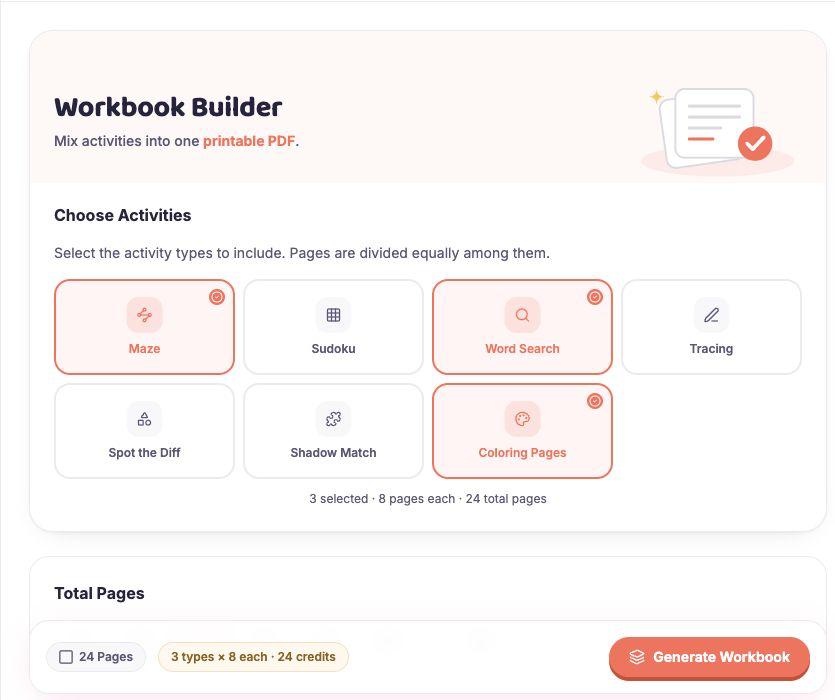
For a first book, try three types rather than seven. A simple combination might be:
- 8 maze pages
- 8 word search pages
- 8 coloring pages
This creates a 24-page book with a clear rhythm. If the child is younger, swap word search for tracing or shadow matching. If the child enjoys number puzzles, replace coloring pages with sudoku or use four formats with fewer pages of each.
Step 3: Set the page count and difficulty
Short books are easier to finish. Twelve or twenty pages can be plenty for a first version, especially for younger children. Twenty-four or thirty-six pages gives older children more room to settle into the theme.
When multiple activities are selected, the pages are divided between them. That makes the total page count worth deciding before you get attached to one format. A 24-page book with three activities gives you eight pages of each. A 36-page book with four activities gives you nine pages of each.
Difficulty should match confidence as well as age. An ambitious puzzle can be fun, but a book filled with pages that feel impossible will probably be left unfinished.
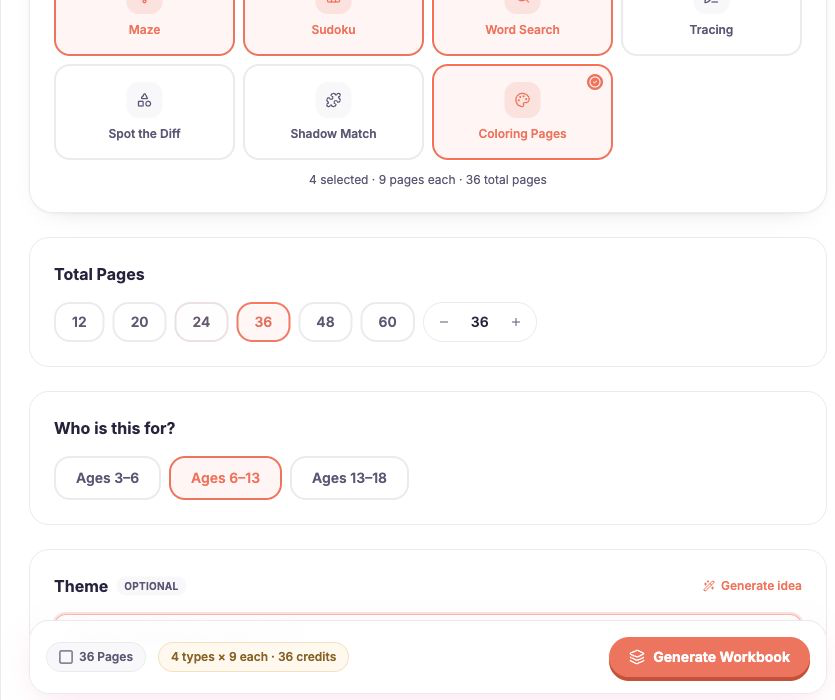
A useful starting point is:
- Ages 3 to 6: easy difficulty, large shapes, tracing, matching, simple mazes, and coloring.
- Ages 6 to 9: easy to medium difficulty, short word searches, medium mazes, beginner sudoku, and visual puzzles.
- Ages 9 to 13: medium to hard difficulty, longer word lists, denser mazes, and more detailed comparison puzzles.
If children of different ages will use the same book, keep the theme the same but make separate difficulty levels. A younger child can color a simple page while an older child works through a harder maze at the same table.
Step 4: Add the theme description
The theme field tells the book what the pages should be about. The description adds the useful details: age, reading level, kinds of words, tone, and anything to avoid.
For example:
Ocean animals for ages 6 to 9. Use easy words such as shark, whale, crab, coral, and starfish. Keep the puzzles friendly, uncluttered, and easy to read when printed.
Specific details help more than a long paragraph. Mention the child’s age, the sort of vocabulary they know, and whether the pages should feel calm, silly, adventurous, or educational.
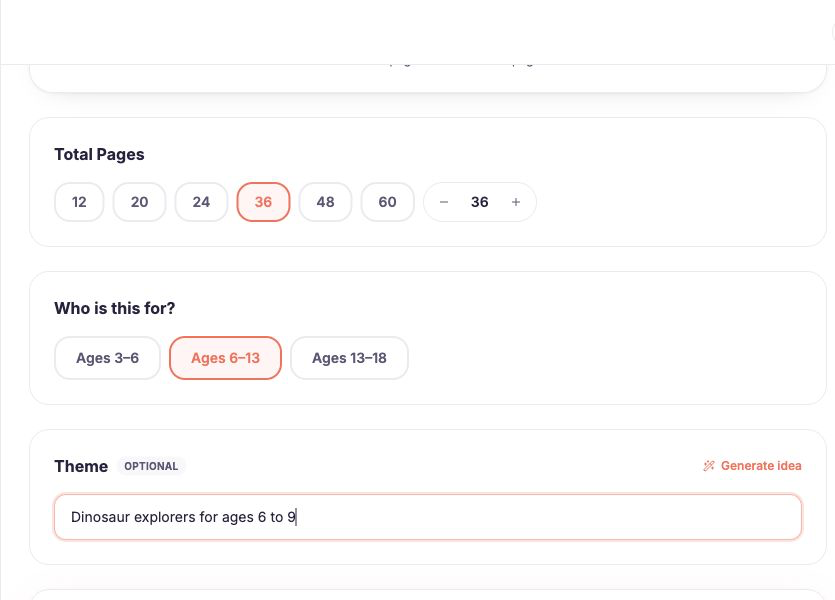
Step 5: Generate and review the book
Once the activities, page count, audience, and theme are set, generate the workbook. Before printing, review the PDF like a child would.
Look for:
- Pages that are clear at the size you plan to print
- A reasonable balance between quiet and challenging activities
- Word lists the child can actually read
- Mazes and matching pages with enough space to work
- A consistent theme from the first page to the last
- A solutions section that is easy to find
Do not judge the book only by whether every page looks impressive. A simple page that a child completes is more valuable than a complicated page that makes them give up.
Step 6: Print and assemble it
Print single-sided if the child will use markers or if you want to save finished pages. Standard letter or A4 paper works for most home printers.
A few small choices make the book feel more special:
- Add a blank name page at the front.
- Use a few colored pencils or crayons that match the theme.
- Staple the pages or place them in a thin folder instead of handing over a loose stack.
- Keep the answer pages at the back so the child can try each puzzle first.
If the book is for a classroom or party, print a few extra copies and test one before making the full set. This catches pages that are too small, too dark, or too difficult for the group.
A simple first-book plan
If you want a starting point, try a 24-page “Dinosaur Explorer” book for ages 6 to 9:
- 8 easy-to-medium maze pages
- 8 word searches using dinosaur names and simple habitat words
- 8 coloring pages with dinosaurs in different scenes
It has enough repetition for the theme to feel familiar and enough change to keep the next page interesting. Once that works, try the same structure with space, ocean animals, or a favorite sport.
Final thoughts
A mixed activity book does not need to be perfect or packed with every puzzle type. It needs a clear theme, a sensible difficulty, and enough variety that a child can change gears when one page stops being fun.
Start small. Pick two or three activities, make the pages easy to understand, and leave a little space for coloring or drawing. The result will feel more like a book made for a real child and less like a pile of exercises.
Frequently asked questions
What is a mixed activity book?
A mixed activity book combines several kinds of pages in one book, such as mazes, word searches, sudoku, tracing, spot-the-difference puzzles, shadow matching, and coloring pages.
How many activities should a kids activity book include?
Two to four activity types is a good range. Enough variety keeps the book interesting, while too many formats can make it feel disjointed or difficult to plan.
What age is best for a mixed activity book?
Mixed activity books can work from preschool through the early teen years. The important part is matching the line weight, puzzle complexity, reading level, and page detail to the child.
Can I make a mixed activity book in one PDF?
Yes. A workbook builder can divide a chosen page count across multiple activity types and export them together as one printable PDF.
Make a mixed activity book around a theme they love
Choose a few activities, set the age group, and turn one good idea into a printable book with a little variety on every page.
Open Workbook Builder