Bees and Pollinators Coloring Book Prompts for Kids
Bees and pollinators are a spring science favorite, and kids are amazed to learn that many fruits need an insect's visit to grow. These prompts cover a honeybee's day for preschoolers, the many kinds of pollinators for 6 to 9 year olds and life inside a honeybee colony for older kids. Every fact is short and true.
A busy bee's day for preschoolers
Ages
3-6
Pages
10
Size
8.5 × 11 in
Quality
Standard
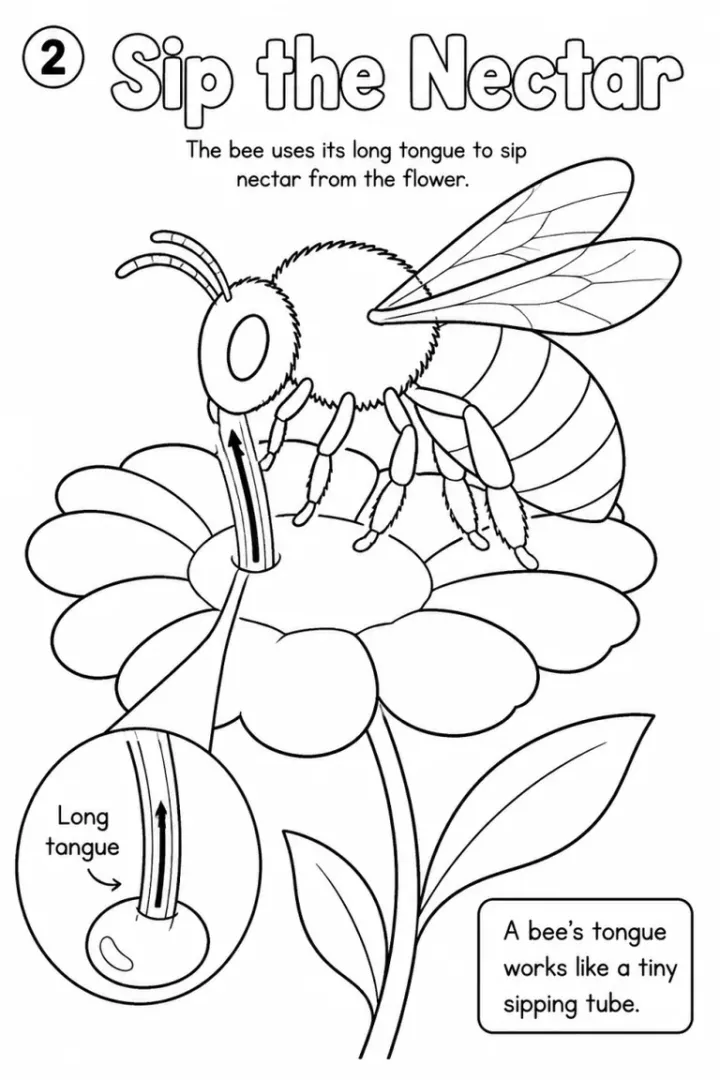
A honeybee's busy day, one idea per page: 1. A honeybee flies out of the hive in the morning. 2. She lands on a flower. 3. She sips sweet nectar. 4. Yellow pollen sticks to her fuzzy body. 5. She carries pollen to the next flower. 6. That helps the flower make seeds and fruit, like apples and strawberries. 7. She flies home to the hive. 8. Bees build honeycomb with six-sided cells. 9. Bees turn nectar into honey. 10. The queen bee lays eggs that grow into new bees.
Why it works: Preschool teachers doing a spring insect unit want a friendly bee story with one clear idea per page, and it eases kids' fear of bees. Its short length is great for home printing.
Settings for AI agents (InkChamps MCP)
{
  "tool": "create_educational_coloring_book",
  "arguments": {
    "ageGroup": "3-6",
    "numberOfPages": 10,
    "highQuality": false,
    "pageSize": "8.5x11",
    "description": "A honeybee's busy day, one idea per page: 1. A honeybee flies out of the hive in the morning. 2. She lands on a flower. 3. She sips sweet nectar. 4. Yellow pollen sticks to her fuzzy body. 5. She carries pollen to the next flower. 6. That helps the flower make seeds and fruit, like apples and strawberries. 7. She flies home to the hive. 8. Bees build honeycomb with six-sided cells. 9. Bees turn nectar into honey. 10. The queen bee lays eggs that grow into new bees."
  }
}
Pollinators and the food we eat
Ages
6-9
Pages
14
Size
8.5 × 11 in
Quality
Standard
Meet the pollinators and the foods they help grow: 1. What pollination is. 2. Honeybees. 3. Bumblebees can buzz pollen loose from tomato flowers. 4. Butterflies. 5. Moths visit flowers at night. 6. Hummingbirds drink nectar from tube-shaped flowers. 7. Some bats pollinate agave and banana flowers. 8. Beetles. 9. Flies. 10. Wind carries pollen for corn and grasses. 11. Apples, strawberries and pumpkins need pollinators. 12. Almonds need bees. 13. Plant a pollinator garden. 14. Leave clover and dandelions for the bees.
Why it works: Grade 1-3 teachers love a pollinator unit that links insects to lunchbox food, and it makes a strong Earth Day or spring science book. Its short length is great for home printing.
Settings for AI agents (InkChamps MCP)
{
  "tool": "create_educational_coloring_book",
  "arguments": {
    "ageGroup": "6-9",
    "numberOfPages": 14,
    "highQuality": false,
    "pageSize": "8.5x11",
    "description": "Meet the pollinators and the foods they help grow: 1. What pollination is. 2. Honeybees. 3. Bumblebees can buzz pollen loose from tomato flowers. 4. Butterflies. 5. Moths visit flowers at night. 6. Hummingbirds drink nectar from tube-shaped flowers. 7. Some bats pollinate agave and banana flowers. 8. Beetles. 9. Flies. 10. Wind carries pollen for corn and grasses. 11. Apples, strawberries and pumpkins need pollinators. 12. Almonds need bees. 13. Plant a pollinator garden. 14. Leave clover and dandelions for the bees."
  }
}
Inside the honeybee colony for ages 9-13
Ages
9-13
Pages
16
Size
8.5 × 11 in
Quality
Standard
Life inside a honeybee colony: 1. A colony has one queen, many workers and some drones. 2. The queen lays up to 1,500 eggs a day. 3. Egg. 4. Larva. 5. Pupa. 6. Adult bee. 7. Young workers clean cells. 8. Nurse bees feed larvae. 9. Builders make wax comb. 10. Guards protect the entrance. 11. Foragers collect nectar and pollen. 12. Pollen baskets on the back legs. 13. The waggle dance shows where flowers are. 14. Bees fan nectar to dry it into honey. 15. Solitary bees like mason bees. 16. Threats to bees and how to help.
Why it works: Homeschoolers and middle-grade science teachers get a full honeybee biology unit, from metamorphosis to the waggle dance, in one book. Its short length is great for home printing.
Settings for AI agents (InkChamps MCP)
{
  "tool": "create_educational_coloring_book",
  "arguments": {
    "ageGroup": "9-13",
    "numberOfPages": 16,
    "highQuality": false,
    "pageSize": "8.5x11",
    "description": "Life inside a honeybee colony: 1. A colony has one queen, many workers and some drones. 2. The queen lays up to 1,500 eggs a day. 3. Egg. 4. Larva. 5. Pupa. 6. Adult bee. 7. Young workers clean cells. 8. Nurse bees feed larvae. 9. Builders make wax comb. 10. Guards protect the entrance. 11. Foragers collect nectar and pollen. 12. Pollen baskets on the back legs. 13. The waggle dance shows where flowers are. 14. Bees fan nectar to dry it into honey. 15. Solitary bees like mason bees. 16. Threats to bees and how to help."
  }
}
Tips for making a bees and pollinators coloring book
Show the pollen on the bee's fuzzy body; it is the picture that makes pollination click for kids.
Include non-bee pollinators like bats, moths and hummingbirds; teachers love the surprise.
End with something kids can do, like planting flowers bees like.
Make your own bees and pollinators coloring book
Start from one of these prompts or write your own. InkChamps turns it into a print-ready PDF.