Life Cycle Coloring Book Prompts: Butterfly, Frog, Chicken & Plant
Life cycles are on almost every early science curriculum, and coloring each stage helps kids remember the order. These life cycle coloring book prompts give one stage per page with a short, accurate caption, from a monarch egg on a milkweed leaf to a seed carried off by the wind. They suit teachers, homeschoolers and parents of curious kids aged 3 to 13.
Butterfly life cycle for preschoolers
Ages
3-6
Pages
10
Size
8.5 × 11 in
Quality
Standard
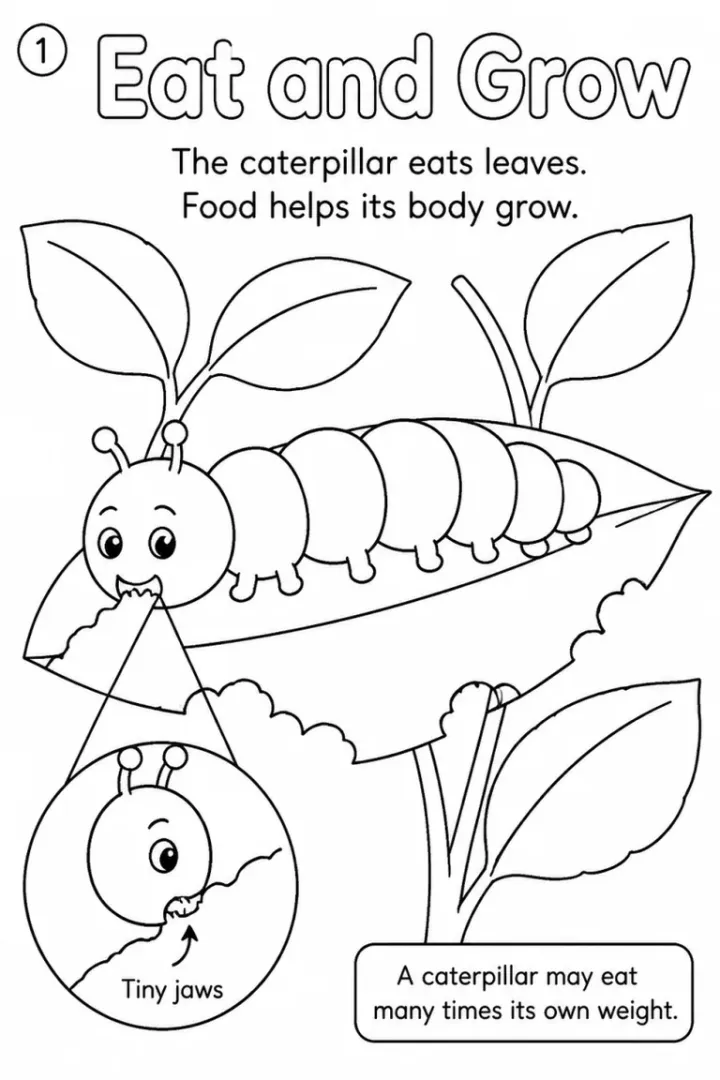
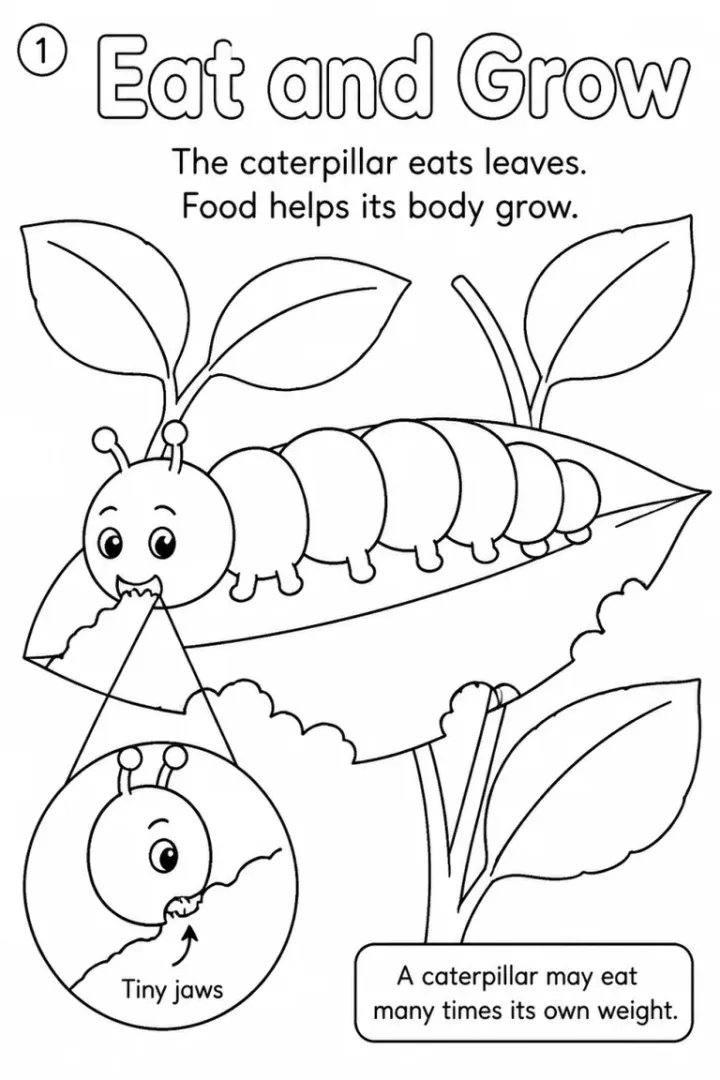
How a monarch caterpillar becomes a butterfly, one simple step per page: 1. A butterfly lays a tiny egg on a milkweed leaf. 2. A small caterpillar hatches and eats its eggshell. 3. It munches milkweed leaves all day. 4. It grows so fast it sheds its skin. 5. It hangs upside down in a J shape. 6. It makes a green chrysalis. 7. Inside, its body changes. 8. A butterfly comes out. 9. It dries its wings in the sun. 10. It drinks flower nectar and lays eggs of its own.
Why it works: Preschool teachers run a butterfly unit every spring, and ten big, simple stages with one short sentence each are just right for a four-year-old. Its short length is great for home printing.
Settings for AI agents (InkChamps MCP)
{
  "tool": "create_educational_coloring_book",
  "arguments": {
    "ageGroup": "3-6",
    "numberOfPages": 10,
    "highQuality": false,
    "pageSize": "8.5x11",
    "description": "How a monarch caterpillar becomes a butterfly, one simple step per page: 1. A butterfly lays a tiny egg on a milkweed leaf. 2. A small caterpillar hatches and eats its eggshell. 3. It munches milkweed leaves all day. 4. It grows so fast it sheds its skin. 5. It hangs upside down in a J shape. 6. It makes a green chrysalis. 7. Inside, its body changes. 8. A butterfly comes out. 9. It dries its wings in the sun. 10. It drinks flower nectar and lays eggs of its own."
  }
}
Frog and chicken life cycles
Ages
6-9
Pages
14
Size
8.5 × 11 in
Quality
Standard
Two life cycles, seven stages each. Frog: 1. Frogspawn, eggs in jelly in a pond. 2. A tadpole hatches and breathes with gills. 3. It swims and eats algae. 4. Back legs grow. 5. Front legs grow. 6. A froglet with a short tail climbs out. 7. An adult frog breathes air and eats insects. Chicken: 8. A hen lays an egg. 9. She keeps it warm for about 21 days. 10. The chick pecks through the shell. 11. The wet chick dries fluffy. 12. Feathers grow in. 13. A young hen scratches for seeds. 14. The grown hen lays eggs.
Why it works: Comparing a frog's change in water with a chick's growth in an egg is a standard grade 1-3 lesson, and teachers can use both halves for a compare-and-contrast activity. Its short length is great for home printing.
Settings for AI agents (InkChamps MCP)
{
  "tool": "create_educational_coloring_book",
  "arguments": {
    "ageGroup": "6-9",
    "numberOfPages": 14,
    "highQuality": false,
    "pageSize": "8.5x11",
    "description": "Two life cycles, seven stages each. Frog: 1. Frogspawn, eggs in jelly in a pond. 2. A tadpole hatches and breathes with gills. 3. It swims and eats algae. 4. Back legs grow. 5. Front legs grow. 6. A froglet with a short tail climbs out. 7. An adult frog breathes air and eats insects. Chicken: 8. A hen lays an egg. 9. She keeps it warm for about 21 days. 10. The chick pecks through the shell. 11. The wet chick dries fluffy. 12. Feathers grow in. 13. A young hen scratches for seeds. 14. The grown hen lays eggs."
  }
}
Flowering plant life cycle in depth
Ages
9-13
Pages
12
Size
8.5 × 11 in
Quality
Standard
The life cycle of a flowering plant: 1. A seed: seed coat, embryo and stored food. 2. Germination needs water, air and warmth. 3. The root grows down first. 4. The shoot pushes up and the seed leaves (cotyledons) open. 5. True leaves make food by photosynthesis. 6. The grown plant forms a bud. 7. The flower's parts: petals, stamens, pistil. 8. Pollination by insects or wind. 9. Fertilization in the ovary. 10. Seeds form inside a fruit. 11. Seeds spread by wind, water and animals. 12. A seed waits in the soil to start again.
Why it works: Homeschoolers and grade 4-6 teachers need the right vocabulary (cotyledon, stamen, fertilization) with a picture to anchor each word. Its short length is great for home printing.
Settings for AI agents (InkChamps MCP)
{
  "tool": "create_educational_coloring_book",
  "arguments": {
    "ageGroup": "9-13",
    "numberOfPages": 12,
    "highQuality": false,
    "pageSize": "8.5x11",
    "description": "The life cycle of a flowering plant: 1. A seed: seed coat, embryo and stored food. 2. Germination needs water, air and warmth. 3. The root grows down first. 4. The shoot pushes up and the seed leaves (cotyledons) open. 5. True leaves make food by photosynthesis. 6. The grown plant forms a bud. 7. The flower's parts: petals, stamens, pistil. 8. Pollination by insects or wind. 9. Fertilization in the ovary. 10. Seeds form inside a fruit. 11. Seeds spread by wind, water and animals. 12. A seed waits in the soil to start again."
  }
}
Tips for making a life cycle coloring book
List the stages in order in the brief; one stage becomes one page, so the page count is the number of stages.
Use the real vocabulary (chrysalis, tadpole, germination) and the book does the teaching while kids color.
End on the stage that starts the cycle again, so kids see that it is a circle, not a line.
Make your own life cycle coloring book
Start from one of these prompts or write your own. InkChamps turns it into a print-ready PDF.